






































































































































































Best Superfoods for a Balanced Diet: 15 Nutrient-Rich Foods
Author: RVLNSV PRASAD
Updated On: October 2026
About Us
Author Bio
Editorial Policy
Contact Us
Introduction
The best superfoods for a balanced diet do not have to be expensive, imported, or difficult to prepare. Some of the most useful choices are already familiar foods: lentils, leafy vegetables, oats, eggs, peanuts, seasonal fruit, and whole grains.
The word superfood sounds impressive, but it is not a regulated scientific category. A food does not become a miracle ingredient simply because it contains antioxidants or vitamins. Its real value depends on its nutrients, how often you eat it, what it replaces, and how it fits into your overall diet.
For example, adding walnuts to a breakfast that already contains enough calories may not provide the same practical benefit as replacing a sugary snack with a small portion of nuts. Similarly, eating spinach occasionally cannot compensate for a diet that consistently lacks vegetables, protein, or fiber.
The latest dietary guidance continues to emphasize this broader approach. The 2024 Dietary Guidelines for Indians from ICMR–NIN encourage diverse, balanced food choices rather than relying on a single nutrient or food. A 2025 systematic review of dietary patterns and cardiovascular disease also found that eating patterns rich in vegetables, fruits, legumes, nuts, and whole grains were associated with better cardiovascular outcomes.
This guide explains 15 nutrient-rich foods worth considering, how to use them in everyday meals, which affordable alternatives work well in India, and how to avoid common superfood myths.
Quick Answer: What Are the Best Superfoods for a Balanced Diet?
The best superfoods for a balanced diet are foods that provide useful nutrients and fit into your regular meals. Good options include leafy greens, lentils, beans, whole grains, fruit, nuts, seeds, eggs, yogurt, and fish or suitable plant-based protein sources.
No single food supplies everything your body needs. The most effective approach is to combine different food groups so that your diet provides protein, fiber, healthy fats, vitamins, minerals, and sufficient energy.
For most people, a varied diet built around minimally processed foods is more useful than buying expensive products marketed as superfoods.
Key Takeaways
- “Superfood” is a popular nutrition term, not a formal medical classification.
- Variety matters because different foods provide different nutrients.
- Affordable foods such as lentils, peanuts, seasonal vegetables, and whole grains can be highly nutritious.
- Fruit, vegetables, pulses, whole grains, nuts, and suitable protein sources all contribute to a balanced diet.
- More is not always better. Portion size, preparation, allergies, and individual health needs matter.
- Food can support health, but no single ingredient guarantees disease prevention or rapid
- Consistent eating habits are generally more useful than short-term food trends.
What Does “Superfood” Really Mean?
A superfood is generally understood to be a food promoted for its nutrient content or potential health benefits. However, there is no universally accepted scientific definition that determines which foods qualify.
Harvard’s Nutrition Source explains the difference between superfood claims and scientific evidence. Foods such as berries, nuts, leafy greens, and whole grains can provide valuable nutrients, but their benefits should not be exaggerated.
Consider three examples:
- Nutrient density: A food supplies useful vitamins, minerals, protein, fiber, or other nutrients relative to its energy content.
- Dietary pattern: A combination of foods provides a broader range of nutrients than one food can supply alone.
- Health claim: Evidence that a food contains antioxidants does not automatically prove that it prevents a specific disease.
This distinction helps readers make informed decisions without being influenced by marketing language.
15 Best Superfoods for a Balanced Diet
1. Leafy Green Vegetables
Leafy greens such as spinach, amaranth leaves, fenugreek leaves, and other local greens provide several vitamins, minerals, and plant compounds. Depending on the variety, they can contribute folate, vitamin K, carotenoids, and fiber.
Dark green vegetables are useful because they add nutrients and variety without requiring complicated recipes.
Easy ways to eat them:
- Add spinach or amaranth leaves to dal.
- Prepare a vegetable stir-fry with a moderate amount of oil.
- Mix chopped greens into an omelet or savory pancake.
- Include cooked greens alongside rice or roti.
Leafy greens do not all contain identical nutrients, so rotating different varieties is more useful than relying on only one. Harvard’s guide to vegetables and fruits explains why both variety and quantity matter.
2. Lentils and Dal
Lentils are among the most practical nutrient-rich foods for Indian households. They provide plant protein, fiber, and several minerals, although the exact amounts depend on the type of lentil and how it is prepared.
Dal can also help make a meal more satisfying when served with vegetables and an appropriate portion of rice or another grain.
Easy ways to eat them:
- Prepare moong dal with vegetables.
- Make masoor dal for lunch.
- Add cooked lentils to soups or vegetable dishes.
- Combine dal with rice and a side of greens.
You do not need to buy specialty protein powders simply to include plant protein in your diet. Pulses are a useful everyday option, particularly when they form part of a varied eating pattern.
3. Beans and Chickpeas
Chickpeas, kidney beans, black-eyed peas, and other beans provide plant protein, fiber, and useful minerals. They are also convenient because dried pulses can be stored for long periods.
Their fiber content makes them a valuable part of meals that would otherwise contain mostly refined grains.
Practical ideas: Prepare chickpea curry, add beans to salads, or mix cooked beans into vegetable dishes. If you use canned beans, choose products with suitable sodium levels and rinse them when appropriate.
People who are not accustomed to eating much fiber may find that increasing bean intake too quickly causes gas or bloating. Begin with manageable portions and increase gradually.
4. Oats and Other Whole Grains
Oats provide carbohydrates, fiber, and several micronutrients. They contain beta-glucan, a soluble fiber studied for its role in cholesterol management.
Other useful grain choices include whole-wheat products, barley, millets, and brown rice. Each has a different nutritional profile, so variety can help improve the overall quality of your diet.
A 2025 systematic review and meta-analysis of whole-grain intake and hypertension risk found an association between higher whole-grain intake and lower hypertension risk. The authors also reported substantial variation between studies, so the results should not be interpreted as proof that whole grains alone prevent high blood pressure.
Easy ways to eat them:
- Prepare oats with milk or an appropriate fortified alternative.
- Choose whole-wheat roti more often.
- Rotate rice with millet or other whole grains.
- Combine grains with dal and vegetables for a more balanced meal.
5. Seasonal Fruits
Fruits provide varying amounts of fiber, vitamins, minerals, and plant compounds. Apples, guavas, oranges, papaya, bananas, and seasonal local fruits can all contribute to a balanced diet.
You do not need to buy imported berries to obtain useful nutrients. The best choice often depends on availability, freshness, price, and personal preference.
Whole fruit is generally preferable to juice because it retains its fiber and usually takes longer to consume.
The World Health Organization’s healthy-diet guidance recommends a varied intake of fruits and vegetables as part of a healthy eating pattern.
Easy ways to eat them: Add fruit to breakfast, carry one as a snack, or serve chopped fruit alongside a meal. Choose whole fruit more often than sweetened fruit drinks.
6. Berries
Strawberries, blueberries, raspberries, and other berries contain fiber and plant compounds such as anthocyanins, which contribute to their color.
Research has examined berries and their compounds in relation to cardiovascular and metabolic health. However, the presence of antioxidants does not mean that berries can cure inflammation, prevent dementia, or reverse chronic disease.
Fresh berries can be expensive in some locations. Frozen berries without added sugar are another option where available, but local fruits can also provide a varied range of nutrients.
Practical idea: Add a small serving of berries to plain yogurt or oats when affordable. If they are not available, use a seasonal fruit you enjoy.
7. Nuts, Including Peanuts and Walnuts
Nuts provide combinations of protein, unsaturated fats, fiber, and micronutrients. Walnuts are known for their plant-based omega-3 fat, while almonds and peanuts offer other useful nutrients.
Peanuts are particularly practical in India because they are often less expensive than many imported nuts. Although peanuts are botanically legumes, they are commonly used like nuts in everyday diets.
A 2025 umbrella review of food groups and all-cause mortality found that higher nut consumption was associated with lower mortality in the evidence examined. These associations do not prove that nuts alone caused the differences.
Easy ways to eat them:
- Choose a small portion of unsalted nuts.
- Add chopped nuts to oats or yogurt.
- Use roasted peanuts as part of a snack.
- Include peanut paste in suitable meals without excessive added sugar.
People with peanut or tree-nut allergies should avoid the relevant foods and follow medical advice.
8. Seeds Such as Chia, Flaxseed, and Sesame
Seeds can provide fiber, unsaturated fats, minerals, and plant compounds. Flaxseed and chia seeds contain alpha-linolenic acid, a plant-based omega-3 fatty acid. Sesame seeds supply several minerals and can add flavor to meals.
You do not need to consume every type of seed every day. Choose a few that fit your meals and budget.
Easy ways to use seeds:
- Add ground flaxseed to oats or yogurt.
- Mix sesame seeds into suitable vegetable dishes.
- Use chia seeds in a soaked preparation.
- Sprinkle a modest amount of seeds over a meal for texture.
Ground flaxseed may be easier to digest than whole flaxseed. Introduce fiber-rich seeds gradually and drink enough fluids.
9. Eggs
Eggs provide high-quality protein and several nutrients, including vitamin B12 and choline. They are convenient for breakfast, lunch, or dinner and can be prepared in many ways.
Their place in a diet depends on individual needs, preferences, and the rest of the meal. People with specific medical conditions or dietary restrictions may need individualized advice.
Easy ways to eat eggs: Boil them, prepare an omelet with vegetables, or serve them alongside whole-grain toast or roti and fruit.
For vegetarians who eat eggs, they can be one convenient protein option. For those who do not eat eggs, dal, beans, soy foods, dairy products, and other suitable protein sources can help meet protein needs.
10. Yogurt and Curd
Plain yogurt and curd can provide protein, calcium, and other nutrients. Some products also contain live microorganisms, although the type and amount vary.
Yogurt can be a practical addition to meals, particularly when paired with fruit, oats, or a balanced lunch.
Do not assume that every yogurt product has the same probiotic effects. Added sugar, processing, and the microorganisms used can differ between products.
Easy ways to eat it: Choose plain curd with meals, mix it with fruit, or use it in a savory preparation. People who are lactose intolerant may tolerate some yogurt products, but individual responses differ.
11. Fatty Fish
Fish such as sardines, mackerel, and salmon provide protein, and some varieties supply the long-chain omega-3 fats EPA and DHA.
Fish can be a useful part of a varied diet for people who eat seafood. Affordable local varieties may provide a more practical option than imported fish.
The WHO healthy-diet guidance emphasizes dietary variety and suitable nutrient sources rather than one special food.
Easy ways to eat fish: Grill, steam, bake, or prepare it in a home-cooked dish with vegetables. Choose preparation methods that do not require excessive salt or deep-frying.
People who do not eat fish can obtain protein from legumes, soy foods, eggs, dairy, or other suitable sources. Plant omega-3 sources can contribute alpha-linolenic acid, although the body converts only a limited amount of it into EPA and DHA.
12. Soy Foods
Soybeans, tofu, and other soy foods can provide protein and, depending on the product, other useful nutrients. They can be particularly helpful for people following vegetarian or vegan eating patterns.
Soy foods are versatile and can be added to curries, stir-fries, soups, or mixed vegetable dishes.
Easy ways to eat them: Add tofu to a vegetable stir-fry, prepare soybeans as part of a meal, or use a suitable soy product as a protein source.
Choose products that fit your dietary needs, and check labels for added sodium or other ingredients when relevant.
13. Tomatoes
Tomatoes provide vitamin C, potassium, and carotenoids, including lycopene. Their nutritional contribution depends on the variety, amount consumed, and preparation.
Tomatoes are also easy to include in familiar Indian meals, making them a practical choice rather than a fashionable specialty food.
Easy ways to eat them:
- Add tomatoes to dal or vegetable curry.
- Prepare a tomato-based sauce.
- Include fresh tomatoes in a salad.
- Combine tomatoes with other vegetables and a suitable source of protein.
No single antioxidant-rich food guarantees protection against cancer or other diseases. The broader dietary pattern remains the more useful focus.
14. Sweet Potatoes and Other Colorful Vegetables
Sweet potatoes provide carbohydrates, fiber, and carotenoids. Other colorful vegetables, including carrots and pumpkin, also supply different nutrients.
Color can be a helpful reminder to vary your vegetable choices, but it is not a complete measure of nutritional value.
Easy ways to eat them: Boil, steam, roast, or prepare sweet potatoes as part of a meal with protein and other vegetables. Use spices and herbs for flavor instead of relying on large amounts of salt or added sugar.
If sweet potatoes are expensive or unavailable, other vegetables and suitable staple foods can still contribute to a balanced diet.
15. Fermented Foods
Fermented foods such as plain yogurt, certain fermented vegetables, and other traditional preparations can add variety to meals. Some fermented products contain live microorganisms, but their effects depend on the food and the microorganisms present.
Fermented food is not automatically a probiotic treatment. Different products are made in different ways, and some are high in salt or added sugar.
Easy ways to include them: Eat plain curd with a meal or include a suitable fermented food in modest amounts. Follow food-safety practices, especially when preparing fermented foods at home.
People with specific medical conditions or dietary restrictions may need to choose fermented foods carefully.
Best Superfoods for a Balanced Diet: Quick Comparison Table
| Food | Main nutritional contribution | Budget-friendly option |
|---|---|---|
| Leafy greens | Vitamins, minerals, fiber | Local seasonal greens |
| Lentils | Protein, fiber, minerals | Moong or masoor dal |
| Beans and chickpeas | Protein, fiber | Dried pulses cooked at home |
| Oats and whole grains | Carbohydrates, fiber | Oats, whole wheat, millets |
| Fruit | Vitamins, fiber, plant compounds | Seasonal local fruit |
| Berries | Fiber and plant compounds | Frozen berries or local fruit |
| Nuts and peanuts | Protein, unsaturated fats | Unsalted peanuts |
| Seeds | Fiber, fats, minerals | Sesame or flaxseed |
| Eggs | Protein, vitamin B12, choline | Eggs were suitable. |
| Yogurt or curd | Protein, calcium | Plain curd |
| Fish | Protein: omega-3 fats in some types | Suitable local fish |
| Soy foods | Protein | Tofu or other suitable soy foods |
| Tomatoes | Vitamin C and carotenoids | Fresh local tomatoes |
| Sweet potatoes | Carbohydrates, fiber, carotenoids | Other seasonal vegetables |
| Fermented foods | Varies by product | Plain curd or suitable traditional foods |
This table is intended as a practical guide, not a ranking of foods from best to worst. Nutrient content varies by serving size, preparation, variety, and product.
Are Expensive Superfoods Better Than Ordinary Foods?
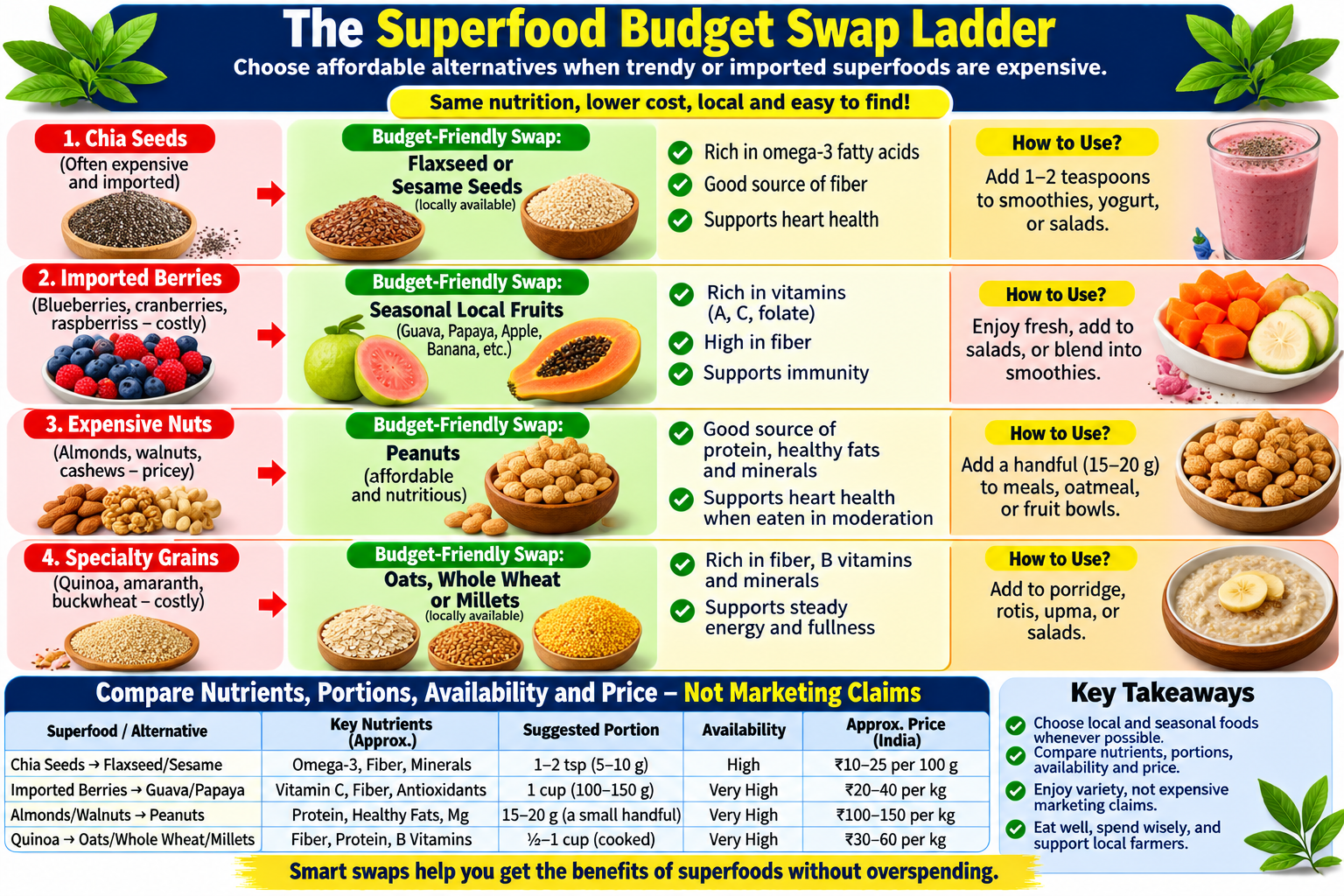
Not necessarily. Some expensive foods contain useful nutrients, but their price does not prove that they are healthier than affordable alternatives.
For example, chia seeds can provide fiber and plant omega-3 fats, but flaxseed may offer a useful alternative. Imported berries can be nutritious, yet guava, oranges, and other local fruits can also contribute valuable nutrients.
The same principle applies to protein foods. Lentils, chickpeas, peanuts, eggs, and suitable dairy or soy products can help provide nutrients without requiring specialty products.
The ICMR–NIN Dietary Guidelines for Indians are a useful resource for building a varied diet around foods available in India.
A better question than “Which superfood is the most powerful?” is “Which nutritious foods can I afford, prepare, and eat regularly?”
How to Combine Superfoods Into Balanced Meals
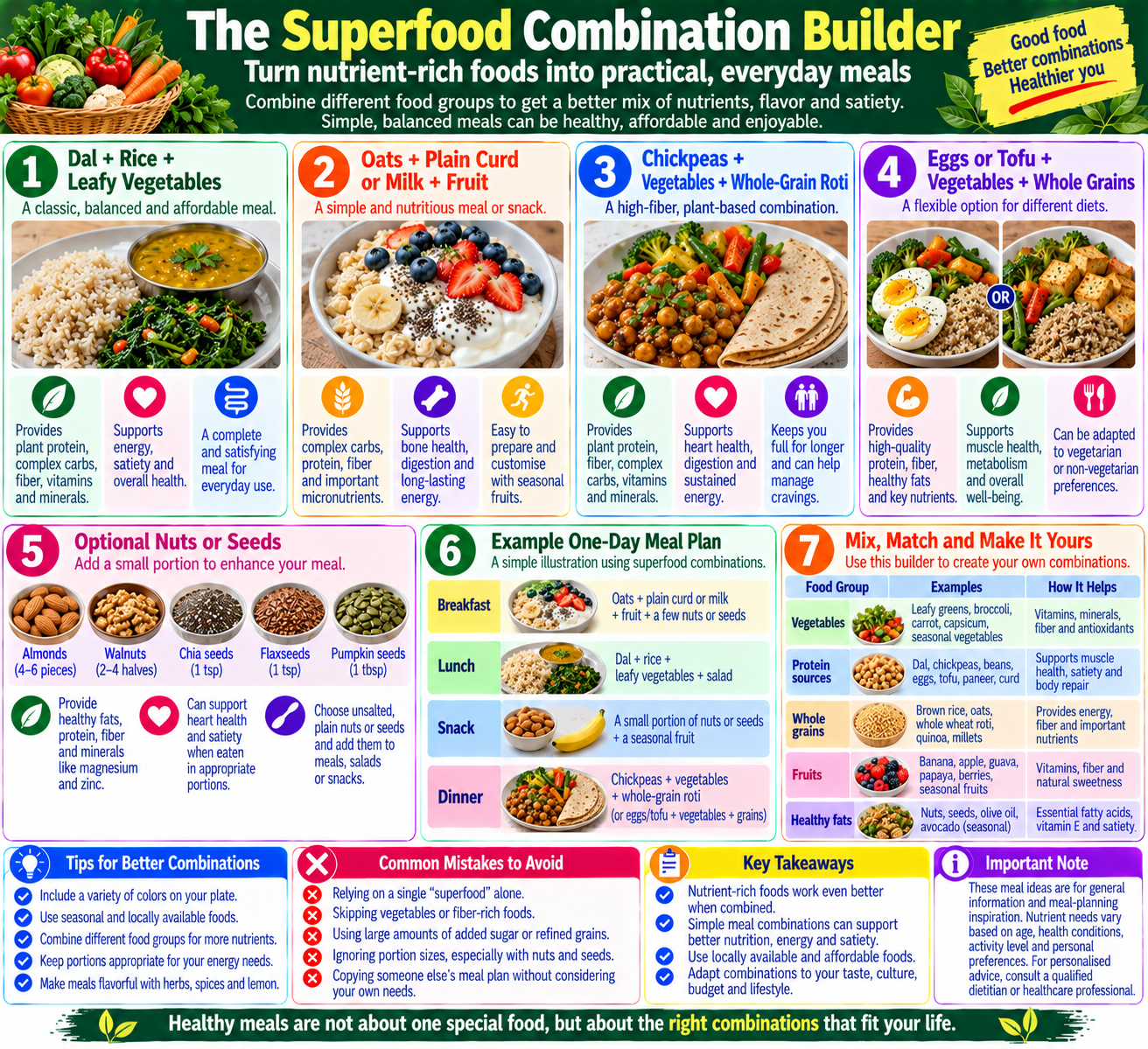
Choosing nutritious ingredients is only part of the process. Combining them in a practical way helps you build meals that provide different nutrients.
The balanced-meal approach
For many meals, try to include:
- A source of protein, such as dal, beans, eggs, fish, tofu, or curd.
- Vegetables or fruit for fiber and micronutrients.
- A suitable carbohydrate source, such as rice, roti, oats, or another grain.
- A modest amount of healthy fat where appropriate.
Individual requirements differ, so these are general meal-building principles rather than a prescription for everyone.
Example one-day meal plan
| Meal | Example | Why it can work |
|---|---|---|
| Breakfast | Oats with plain curd or milk and fruit | Combines carbohydrates, protein, and fruit |
| Mid-morning | Guava or another seasonal fruit | Adds variety and fiber |
| Lunch | Rice or roti, dal, vegetables, and curd | Combines protein sources, grains, and vegetables |
| Afternoon snack | A small portion of peanuts or other suitable nuts | Provides fats and some protein |
| Dinner | Beans or another protein source with vegetables and a grain | Adds variety and supports a balanced eating pattern |
This is an example, not a fixed diet plan. Adjust quantities and ingredients to your appetite, activity level, culture, budget, and health needs.
A Practical Strategy: Build a “Nutrient Gap” Shopping List
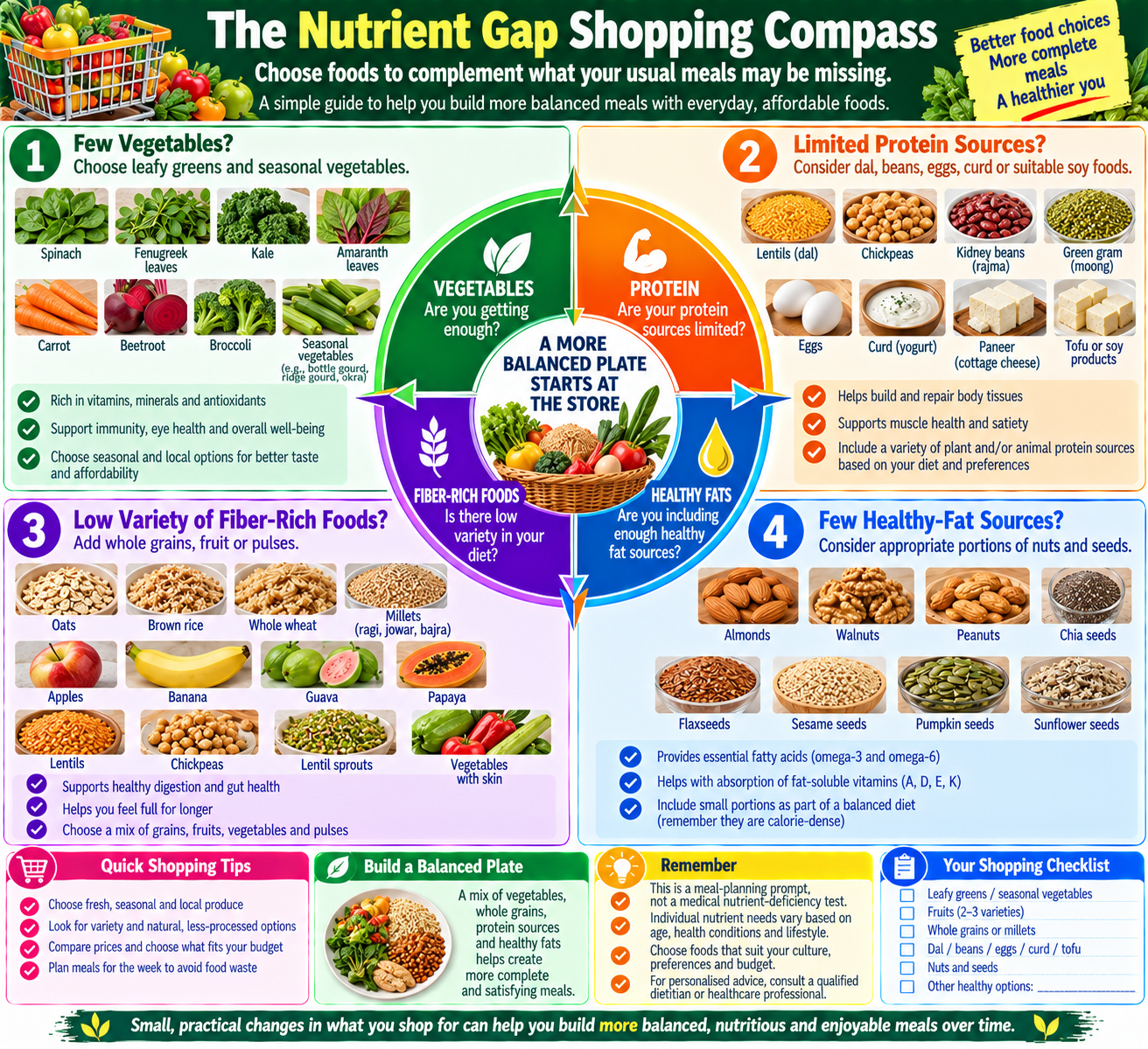
One useful way to shop is to identify what your current meals are missing instead of buying every food promoted as a superfood.
Ask yourself four questions before shopping:
- Do my meals include enough variety? If vegetables are missing from most meals, prioritize suitable seasonal produce.
- Do I have a regular protein source? Add pulses, beans, eggs, dairy, soy foods, fish, or other appropriate options.
- Do I regularly eat fiber-rich foods? Consider whole grains, legumes, fruit, vegetables, nuts, or seeds.
- Am I buying foods I rarely use? Choose ingredients that fit your normal recipes so they are less likely to go to waste.
This shopping strategy is a practical planning tool, not a validated clinical assessment. Its purpose is to help you improve the overall pattern of your diet rather than chase individual foods.
Common Superfood Mistakes to Avoid
Expecting one food to solve every health problem
A nutrient-rich food can contribute to a healthy diet, but it cannot compensate for every dietary gap or replace medical treatment.
Buying expensive products because of marketing
A product advertised as a superfood is not automatically better than familiar foods. Compare the ingredients, nutrition information, cost, and how you will actually use it.
Eating too much of a healthy food
Nuts, seeds, oils, and other energy-dense foods can contribute useful nutrients, but large quantities can add more energy than you intend. Portion size matters.
Ignoring variety
Eating the same few foods every day may limit the range of nutrients you obtain. Rotate vegetables, fruits, protein sources, and grains where possible.
Assuming antioxidants prevent disease
Antioxidants are studied for their roles in biological processes, but laboratory findings do not automatically prove that a food prevents a specific illness. Whole-diet evidence is more informative.
Changing your diet too quickly
A sudden increase in fiber from beans, seeds, or whole grains may cause discomfort. Introduce these foods gradually and pay attention to your individual tolerance.
Confusing food with supplements
Whole foods and supplements are not interchangeable in every situation. Supplements may be useful for specific deficiencies or needs, but taking them unnecessarily can be ineffective or harmful. Ask a qualified healthcare professional about supplementation when appropriate.
Who Should Be Careful When Choosing Superfoods?
Most of the foods discussed here can fit into a varied diet, but suitability depends on individual circumstances.
- Food allergies: Avoid foods that trigger an allergy and follow your clinician’s advice.
- Kidney disease: Some people need individualized guidance about potassium, phosphorus, protein, or other nutrients.
- Diabetes: Portion sizes and carbohydrate intake may need to be adjusted to your treatment plan.
- Digestive conditions: High-fiber foods may need to be introduced gradually or modified according to tolerance.
- Pregnancy and older age: Nutrient needs may differ, making personalized dietary advice useful.
- Medication-related restrictions: Some conditions and treatments require specific dietary considerations.
A balanced diet should support your health without creating unnecessary restrictions. If you have a diagnosed condition, ask your healthcare professional or registered dietitian which food choices best fit your needs.
What Recent Research Says About Nutrient-Rich Eating
Nutrition research increasingly examines dietary patterns rather than assuming that one food can produce broad health benefits.
A 2025 systematic review of dietary patterns and cardiovascular disease found that patterns characterized by more vegetables, fruits, legumes, nuts, whole grains, and unsaturated fats were associated with lower cardiovascular risk in the evidence reviewed. The strength of evidence varied across dietary patterns, and the results do not prove that every individual food independently produces the same benefit.
A 2024 systematic review and meta-analysis of dietary patterns in Asian populations also found associations between higher-quality dietary patterns and lower cardiovascular disease risk. The authors noted that existing Asian diet-quality measures may need updating.
These findings are relevant to Indian readers because they reinforce the value of varied food choices rather than dependence on a short list of fashionable ingredients.
The WHO’s healthy-diet recommendations likewise emphasize diversity, moderation, and balance. This approach allows people to use local, affordable foods while meeting their nutritional needs.
Frequently Asked Questions
1. What are the best superfoods for a balanced diet?
Useful choices include leafy greens, lentils, beans, whole grains, fruit, nuts, seeds, eggs, yogurt, fish, and suitable soy foods. The best mix depends on your dietary preferences, health needs, budget, and food availability.
2. Are superfoods scientifically proven to prevent disease?
Some foods and dietary patterns have evidence supporting health benefits, but “superfood” itself is not a scientific classification. No single food guarantees disease prevention.
3. What are the best affordable superfoods in India?
Lentils, chickpeas, peanuts, seasonal fruit, leafy greens, whole grains, eggs, and plain curd can be practical options. Choose foods you can prepare and eat regularly.
4. How many superfoods should I eat every day?
There is no required number. Focus on including different food groups and rotating your choices rather than trying to reach a particular superfood count.
5. Can superfoods help with weight loss?
Nutrient-rich foods can support a balanced eating pattern, and foods containing protein or fiber may help with fullness. However, weight management depends on overall energy intake, activity, sleep, and other factors.
6. Are supplements better than superfoods?
Not necessarily. Whole foods provide combinations of nutrients, while supplements supply specific substances. Supplements may be useful when a need has been identified, but they are not automatically better than food.
7. Are frozen fruits and vegetables healthy?
Frozen produce can be a useful option, especially when fresh varieties are expensive or unavailable. Choose products without unnecessary added sugar or excessive sodium.
8. Can children eat superfoods?
Many ordinary nutrient-rich foods can be part of a child’s diet when prepared appropriately for age and developmental stage. Consider choking risks, allergies, and individual nutritional needs.
9. Should I eat the same superfoods every day?
Some foods can be eaten frequently, but variety helps provide a broader range of nutrients. Rotate suitable vegetables, fruit, grains, and protein sources.
10. Do I need expensive imported superfoods to stay healthy?
No. A varied diet can be built from affordable local foods. Imported products are not essential simply because they are marketed as superfoods.
Conclusion
The best superfoods for a balanced diet are not necessarily rare or expensive. Leafy greens, lentils, beans, whole grains, seasonal fruit, nuts, seeds, and suitable protein foods can all contribute useful nutrients.
The key is to look beyond marketing claims. A food’s value depends on its nutrient content, the amount you eat, how it is prepared, and how it fits into your overall diet.
Start with manageable changes. Add a vegetable to a meal, include a source of protein, choose whole grains more often, or replace a frequently eaten sugary snack with a suitable alternative.
Over time, these choices can help build a more varied and sustainable eating pattern. You do not need a perfect diet or a cupboard full of specialty foods. You need a practical approach that meets your needs and works in everyday life.
Author Note
Author: RVLNSV PRASAD
This article explains nutrient-rich foods, practical meal choices, and the limits of common superfood claims using established nutrition guidance and published research. It is intended to help readers make informed food choices rather than promote a single food as a cure or treatment.
Personal experience: Add a genuine example of how you incorporate affordable, nutrient-rich foods into your own meals before publishing. Do not claim that a food improved your medical results unless you have appropriate evidence.
Medical Disclaimer
This article is for general educational purposes only. It is not a substitute for medical advice, diagnosis, or treatment. Nutritional needs vary according to age, health conditions, medications, and other factors. Consult a qualified healthcare professional or registered dietitian if you need individualized guidance.
Fitness Disclaimer
Food choices are only one part of overall health. Physical activity should be appropriate for your age, ability, and medical circumstances. No individual food guarantees improved athletic performance, muscle growth, or weight loss.
Evidence-Based Sources and Further Reading
- ICMR–National Institute of Nutrition: Dietary Guidelines for Indians, 2024.
- World Health Organization: Healthy diet.
- Harvard T.H. Chan School of Public Health: Superfoods or Superhype?.
- USDA Nutrition Evidence Systematic Review, 2025: Dietary Patterns and Risk of Cardiovascular Disease.
- Advances in Nutrition, 2024: Dietary Patterns and Cardiovascular Diseases in Asia: A Systematic Review and Meta-Analysis.
- Harvard T.H. Chan School of Public Health: Vegetables and Fruits.
- Harvard Health Publishing: 10 Superfoods to Boost a Healthy Diet.
- PubMed, 2025: Umbrella Review of Systematic Reviews and Meta-analyses on Consumption of Different Food Groups and Risk of All-Cause Mortality.
- Nature Reviews Cardiology, 2025: Dietary Patterns to Promote Cardiometabolic Health.
Related Content:
- 8 Rapid Hair Growth Herbals You Should Try
- 15 Ayurvedic Remedies for High Blood Pressure
- Aromatherapy for Stress Relief and Relaxation: A Comprehensive Guide
- Natural Remedies for Boosting Immunity with Plants: A Comprehensive Guide
- How Nature Walks Can Improve Physical Health: A Comprehensive Guide
- 7 Healing Herbs for Boosting Energy Naturally: A Comprehensive Guide
- Benefits of Outdoor Activities for Mental Health: A Comprehensive Guide
- Best superfoods Revealed: Truth Behind Nutrient Powerhouses
- Check our Blog and Category page (Nature’s & Healing)
- 10 Super Seeds You Should Eat for lose weight
- Home












[…] Best Superfoods Uncovered the Truth Behind Nutrient Packed Powerhouses […]
[…] Best Superfoods Uncovered the Truth Behind Nutrient Packed Powerhouses […]
[…] Best Superfoods Uncovered the Truth Behind Nutrient Packed Powerhouses […]
[…] Best Superfoods Uncovered the Truth Behind Nutrient Packed Powerhouses […]
[…] Best Superfoods Uncovered the Truth Behind Nutrient Packed Powerhouses […]
[…] Best Superfoods Uncovered the Truth Behind Nutrient Packed Powerhouses […]
[…] Best Superfoods Uncovered the Truth Behind Nutrient Packed Powerhouses […]
[…] Best Superfoods Uncovered the Truth Behind Nutrient Packed Powerhouses […]
[…] Best Superfoods Uncovered the Truth Behind Nutrient Packed Powerhouses […]
[…] Best Superfoods Uncovered the Truth Behind Nutrient Packed Powerhouses […]
[…] Best Superfoods Uncovered the Truth Behind Nutrient Packed Powerhouses […]
[…] Best Superfoods Uncovered the Truth Behind Nutrient Packed Powerhouses […]
[…] Best Superfoods Uncovered the Truth Behind Nutrient Packed Powerhouses […]
[…] Best Superfoods Uncovered the Truth Behind Nutrient Packed Powerhouses […]
[…] Best Superfoods Uncovered the Truth Behind Nutrient Packed Powerhouses […]
[…] Best Superfoods Uncovered the Truth Behind Nutrient Packed Powerhouses […]
[…] Best Superfoods Uncovered the Truth Behind Nutrient Packed Powerhouses […]
[…] Best Superfoods Uncovered the Truth Behind Nutrient Packed Powerhouses […]
[…] Best Superfoods Uncovered the Truth Behind Nutrient Packed Powerhouses […]
[…] Best Superfoods Uncovered the Truth Behind Nutrient Packed Powerhouses […]